Reactive Dog Training

Reactive Dog Training in Las Vegas

Reactive dog training addresses leash reactivity, environmental triggers, barking, lunging, and overexcitement. We build calm, structured responses through clear communication and consistent boundaries.

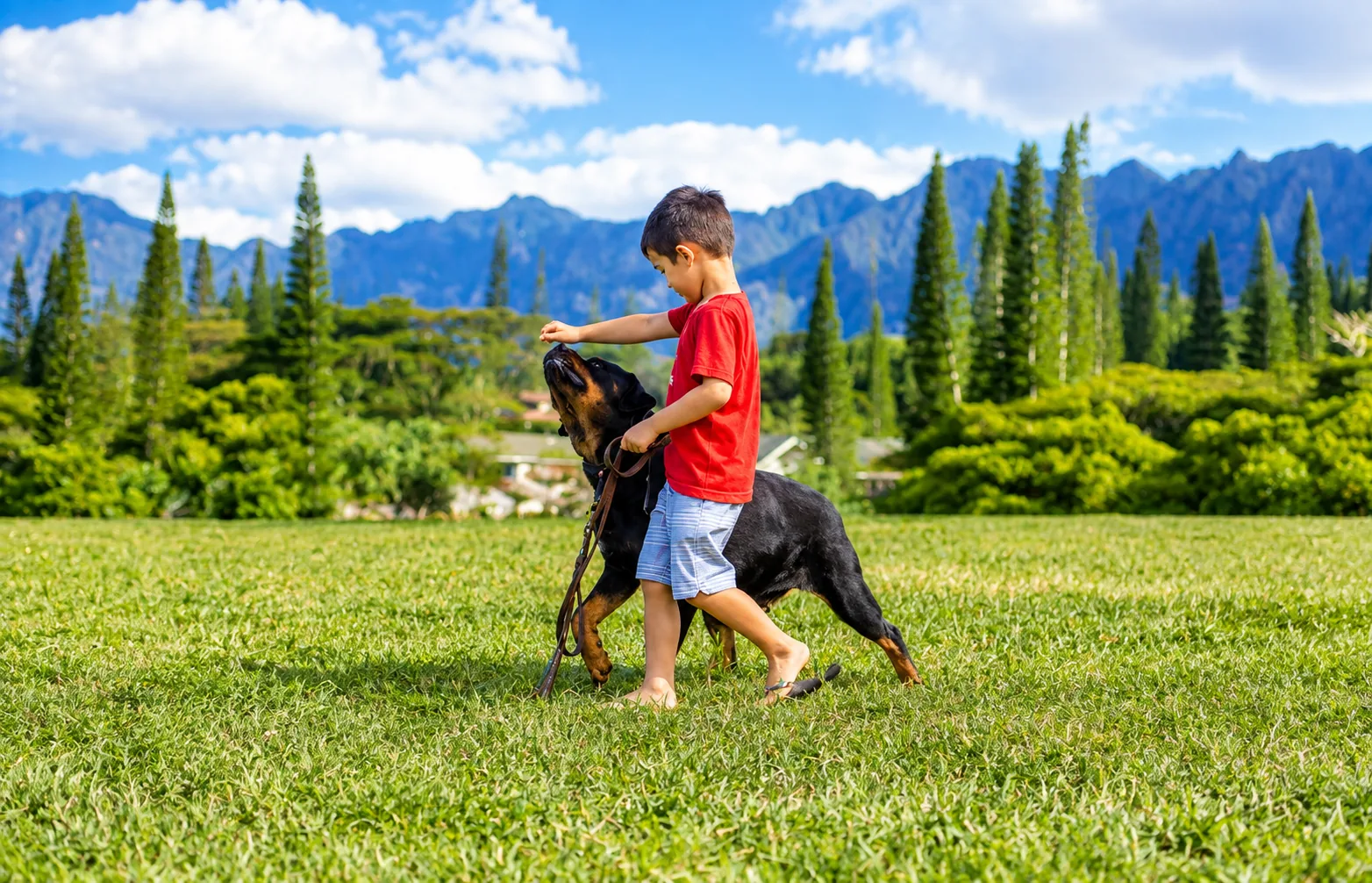
A boy in a red shirt walking a Rottweiler on a leash across a grassy field with evergreen trees and mountains in the background
Calm, Structured Handling

Structure, Focus, and Clear Communication

Reactive dogs are not bad dogs — they are dogs without a clear path through the moment. We build that path with structure, focus work, and impulse control so the dog learns to think before reacting.

Calm handling is a handler skill first. You learn to read your dog's body language, hold clear boundaries, and communicate in a way the dog can follow under pressure — the same quiet control you see in this Malinois.

  • Structured desensitization under threshold, not flooding
  • Focus and impulse-control work that travels to real walks
  • Clear, calm handler mechanics the dog can rely on
01 — Audience

Who This Is For

Built for dogs whose reactions on leash or in public make walks stressful and handlers avoidant.

  • Dogs that lunge, bark, or pull toward triggers on leash
  • Dogs reactive to other dogs, people, vehicles, or environmental stimuli
  • Over-aroused dogs that struggle to settle or recover after a trigger passes
  • Handlers who feel anxious or avoidant about walking their dog
  • Owners ready to commit to structured desensitization and consistent practice

02 — Behaviors Addressed

Behaviors Addressed

  • 01Leash reactivity — lunging, barking, and pulling toward triggers
  • 02Environmental triggers — bikes, skateboards, cars, joggers, wildlife
  • 03Barrier frustration — reactivity through fences, windows, or car doors
  • 04Barking at guests, delivery drivers, or passersby
  • 05Lunging toward other dogs on walks or in waiting areas
  • 06Overexcitement and poor impulse control in stimulating environments

  • 03 — Training Process

    Training Process

    A structured desensitization protocol — not suppression. We change how the dog feels about triggers, not just what they do.

    01

    Trigger Assessment

    We identify your dog's specific triggers, their threshold distance, and the contexts where reactivity happens. You cannot change what you have not mapped.

    02

    Management First

    Before training, we put management in place to prevent rehearsal of the behavior. This stops the cycle and lowers stress for both of you.

    03

    Structured Desensitization

    We work under threshold with controlled exposure, building calm, structured responses. The dog learns an alternative behavior to the reactive one.

    04

    Handler Mechanics

    You learn timing, positioning, leash handling, and how to read your dog's body language. Reactivity is a handler skill problem as much as a dog problem.

    05

    Generalization

    We practice across real contexts — your neighborhood, your vet, your walking routes — so the new response holds where it actually matters.


    04 — Owner Responsibilities

    Owner Responsibilities

    Reactivity work lives or dies on what happens between sessions. Your consistency is the variable that matters most.

    • Avoid triggering situations during early training unless planned with us
    • Practice the desensitization drills at the distances we set — do not push
    • Maintain management protocols between sessions consistently
    • Track trigger exposures and reactions so we can adjust the plan
    • Keep expectations realistic — reactivity improves gradually, not overnight

    05 — Safety Considerations

    Safety Considerations

    We always work under threshold. Flooding a reactive dog makes the problem worse, not better.

    • We always work under threshold — never flooding or forcing exposure
    • Reactive sessions begin at a distance your dog can think and learn
    • A long line and proper equipment are required for safety and control
    • Dogs with a bite history may require a muzzle (see our aggression page)
    • You may pause any session if your dog goes over threshold or you feel unsafe

    06 — Realistic Limitations

    Realistic Limitations

    Reactivity is rarely cured in a session. We will be honest about what is achievable for your dog.

    • Reactivity is often managed and reduced, not always eliminated
    • Progress depends on consistent practice and avoiding trigger overload
    • We do not promise instant results or guaranteed behavior changes
    • Dogs with deep anxiety or trauma may need a longer, slower protocol
    • Setbacks happen — they are part of the process, not a failure

    07 — Pricing Guidance

    Pricing Guidance

    Starting Rate$175 / hour

    Reactive dog training follows our private training rate of $175 per hour. Additional fees may apply for travel outside the core Las Vegas Valley or extended sessions. Final pricing is confirmed during your consultation.

    We do not sell fixed package prices. Each plan is scoped to your dog's triggers and your goals.


    08 — Service Area

    Service Area

    We serve Las Vegas and Pahrump, Nevada. Reactive dog sessions are held in your neighborhood and on your walking routes.

    Region 01Las Vegas, NV
    Region 02Pahrump, NV

    09 — FAQs

    Frequently Asked Questions


    Get Started

    Request a Training Consultation

    Tell us about your dog's triggers and your walking routine. We'll map a desensitization plan and confirm pricing for your location.

    Request a Training Consultation